
%202%20(1).svg)

ROAR - Edition 2
Trusted by









Editor’s Note
Hey there!
Hope you had a lovely start to the month! February is the perfect month to pamper your processes.
Over 60% of the teams we work with switch into execution mode around now, with audits, compliance checks, and new launches hitting the calendar all at once.
But as plans shift and priorities shift, the strategy often gets buried.
Suddenly, you’re chasing vendors instead of building roadmaps and scrambling between spreadsheets and Slack threads 😵💫
You might even find yourself asking: “Do we even own this system?”
At Siemba, we call that a major red flag.
As our Co-founder, Sandhya pointed out in our recent webinar (find the full video below), you can only protect what you own.
If it’s not in your inventory, it’s not in your control!
This month’s ROAR is about breaking that cycle.
We’re focused on turning that first assessment request of the year into a plan that’s predictable, manageable, and most importantly, audit-ready.
Because a well-organized inventory is the best way to show your systems you care 🧡
This Edition Helps You:
✔ Understand what you own
✔ Decide what to assess
✔ Prioritize what to fix
✔ Plan time and budget
✔ Avoid last-minute security firefightingAlong the way, we’ve included practical templates and checklists you can reuse for building and maintaining:
• Asset inventory
• Assessment scoping
• Remediation tracking
• Annual assessment planningThe principle is simple: plan once, then execute steadily all year, while keeping a buffer to adjust for unexpected changes.
- Lavanya Chandrasekharan
Siemba
.jpeg?width=98&height=98&name=IMG_20250706_170151157~2%20(2).jpeg)
So…You’ve Been Asked for a Security Assessment
A security assessment answers 3 questions:
- What systems do we have?
- Are they vulnerable?
- What should we fix first?
In 2026, those questions matter more than ever.
Software ships faster than security can manually review. AI and LLM features introduce new attack paths.
Environments change continuously. Budgets are under scrutiny. Compliance expectations keep rising.
For many teams, the problem is not testing. It is planning. And yearly assessments are no longer optional.
They’re triggered by customer security reviews, audits, and procurement requirements, whether you’re ready or not.
[Exclusive Webinar] Hidden Gaps in Planning Your 2026 Security Assessment Cycle
Siemba’s Co-Founder and Chief Security Officer, Sandhya, and VP of Global Technology Alliances, Kiran, share practical insights on building a smoother, more predictable security assessment cycle. Also:
- Why even mature teams stumble on annual security assessments
- How gaps in inventory and ownership can derail your plans
- Prioritizing beyond scores to focus on what truly impacts your business
- Making AI & LLM security manageable and actionable
- Turning ad-hoc checks into a year-round, predictable rhythm
What Turns Security Chaos into a Plan?
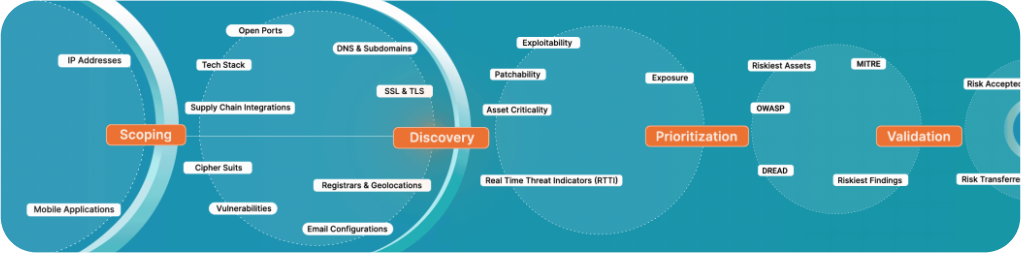
Every effective assessment program, regardless of company size is built on four foundations:
Asset Inventory → Scoping → Remediation → Ownership & Budgeting.svg)
We consistently see this structure used by mature security teams managing complex cloud and application environments.
These convert:
- last-minute audits into predictable execution
- vendor reports into actionable work
- security noise into measurable risk reduction
Security assessments today are also broader than many teams expect.
They include application testing, API and LLM testing, cloud configuration reviews, internal attack paths, and continuous validation. Annual vendor tests alone no longer reflect real risk.
Our assessment planning template helps teams map these different assessment types across the year instead of defaulting to one-off tests and hoping for the best.
Asset Inventory: Do you really know what you own?
Most environments grow quietly. Orphaned APIs, unmanaged cloud accounts, legacy systems, shadow IT, and systems without owners accumulate faster than teams realize.
When ownership isn’t clear, fixes slow down, retesting gets skipped, and audits turn into coordination exercises.
Mature programs maintain a current asset list, assign ownership to every system, track when each asset was last assessed, and tie findings back to the systems that produce them.
Each assessment must have an owner.
Each system must have an owner.
Each finding must have an owner.
Because you can’t secure what you don’t see, and you can’t improve what no one owns!
Our asset inventory and ownership template help teams establish this baseline without starting from scratch.
Scoping: What did you miss to test?
The Biggest Risks Live Outside Your Scope
Late surprises rarely come from what was tested. They come from what was not included.
Hidden dependencies, third-party systems, timeline mismatches, and missing environments are usually operational gaps rather than technical ones.
Teams that scale rely on consistent scoping approaches like clear checklists, tracked scope changes, and timelines aligned with engineering teams.
This reduces rework, improves predictability, and prevents assessments from becoming reactive exercises.
Good scoping is not about narrowing effort. It is about making risk visible.
That is why we’ve included a standard scoping checklist you can adapt for apps, APIs, cloud, and AI features.
Prioritization: Are you fixing the right things or just closing tickets?
CVSS scores are useful, but they don’t reflect business impact. Mature teams treat findings as risk items, not bug tickets.
The real question isn’t “How severe is this vulnerability?”, it is “What business harm does this enable?”
High-performing teams track coverage, remediation time, and repeat findings instead of just counting issues. This shows whether exposure is actually going down.
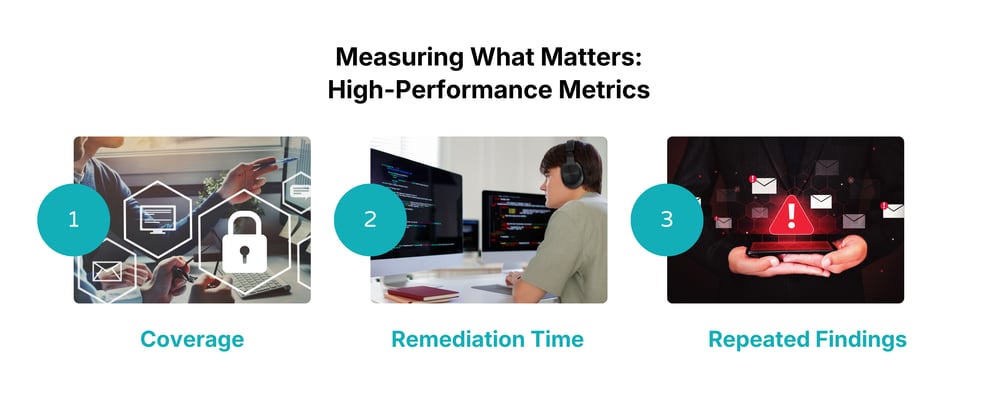
When prioritization improves, conversations shift from vulnerability lists to risk decisions.
Our remediation tracking template makes that measurable instead of relying on isolated examples.
Can You Prove Security Is Worth the Spend?
Planning fails when data is fragmented, effort isn’t visible, risk isn’t tied to spend, and ownership is unclear.
High-performing teams can answer:
• What’s being assessed?
• What’s open?
• What’s fixed?
• What’s next?
• What will it cost?
That turns budgeting from guesswork into planning.
How Long Can Spreadsheets Really Scale?
Yes, this can be managed manually.
But as environments grow:
• Spreadsheets drift
• Findings repeat
• Retesting becomes manual
• Risk loses context
.png?width=1920&height=1080&name=Lifecycle%20Flowchart%20(8).png)
Teams that scale centralize assets, scope, findings, remediation, and retesting into one operational loop.
This is the difference between tracking work and running a program.
Siemba is built to support that full loop without stitching together disconnected tools.
What Security Leaders Are Rethinking for 2026
Security leaders are shifting from isolated tests to continuous assessment models.
We see these shifts most clearly across SaaS, fintech, and cloud-native security teams.
They are assigning ownership for AI and LLM features instead of treating them as edge cases.
They are connecting assessment output directly to remediation workflows. And they are using data to defend security investment.
This shift is not driven by tooling but by operational maturity.
If You Only Fix One Thing This Month…
Validate your asset inventory and system ownership.
You might want to check, "Can we run one assessment end-to-end from scope to fix to retest without disruption?"
If the answer is no, that is your 2026 starting point!
Resources and Planning Tools
To help you operationalize this, check out these detailed blogs:
These resources are designed to help teams move from reactive testing to structured assessment programs.
Ready to Make 2026 Your Most Predictable Security Year?
Centralize all your asset inventory, scoping, findings, remediation, and retesting in one platform with Siemba.
See how teams reduce risk, streamline audits, and track remediation in real time.
Book a demo to experience a complete security assessment loop with Siemba.
Success Stories From Our Clients
.png?width=380&height=378&name=image%20(58).png)
Alex Chriss
Company, Designation
“Unify security capabilities, amplify impact, and strengthen resilience. Here’s why leading organizations trust Siemba to proactively defend against evolving threats.”
Alex
Marko, Ceo
“Unify security capabilities, amplify impact, and strengthen resilience. Here’s why leading organizations trust Siemba to proactively defend against evolving threats.”
John
Company, Designation
“Unify security capabilities, amplify impact, and strengthen resilience. Here’s why leading organizations trust Siemba to proactively defend against evolving threats.”
Juliya
Company, Designation
“Unify security capabilities, amplify impact, and strengthen resilience. Here’s why leading organizations trust Siemba to proactively defend against evolving threats.”
Huno
Company, Designation
“Unify security capabilities, amplify impact, and strengthen resilience. Here’s why leading organizations trust Siemba to proactively defend against evolving threats.”