


.svg)


Every stage of offensive security, on one platform
One platform for continuous attack surface mapping, autonomous vulnerability assessment, autonomous penetration testing, and expert-led testing. One workflow, one risk model, one proof of closure. No blind spots between engagements.












The platform your program has been missing
Four disciplines your team currently buys, staffs, or stitches together separately, now sharing one data model.
One workflow, four disciplines
Mapping finds it. Assessment ranks it. Autonomous testing proves it. Experts go deeper when the stakes demand it.
Continuous, not point-in-time
Discovery never stops, tests run on every release, retesting is unlimited. Blind spots don't wait for next year's audit.
Every surface, including AI
Web, API, cloud, network, mobile, and the LLM and agent systems most vendors can't touch. One methodology across all of it.
Closed means proven closed
Unlimited automated retesting, plus certified engineer sign-off on the fixes that matter. Nothing closes on trust alone.
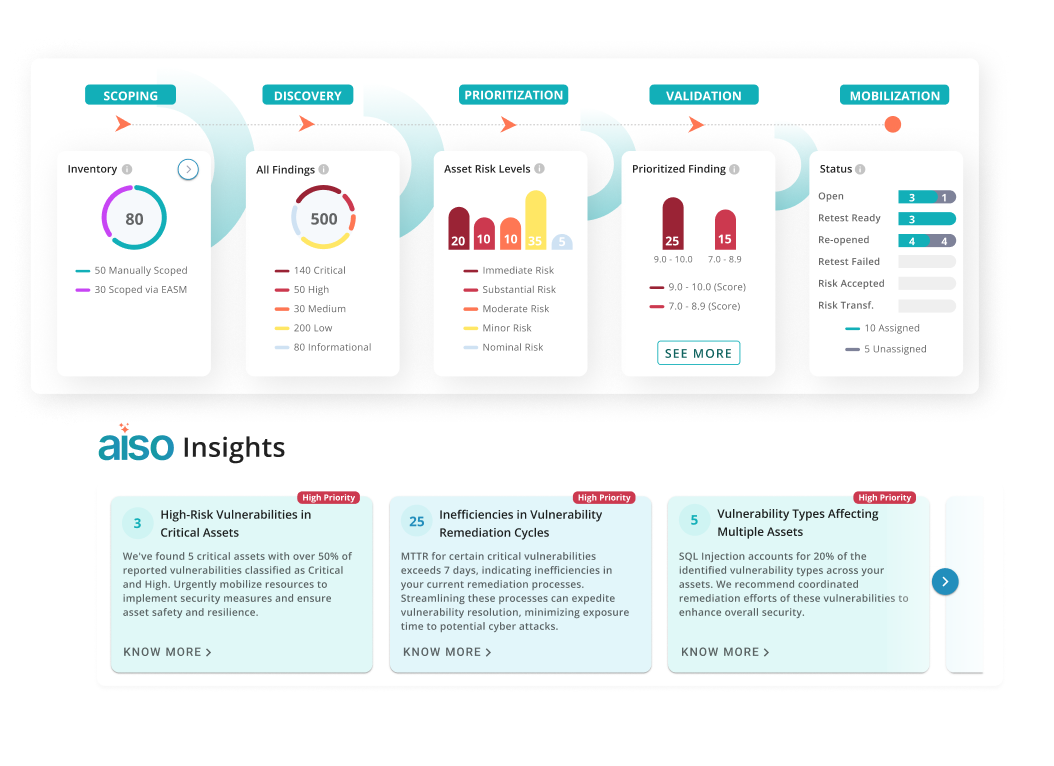
Your AI Security Officer offering real-time insights and risk-based decision support.
Imminent SSL/TLS Certificates Expiry
8 SSL/TLS certificates will expire in the next 30 days, which could lead to service disruptions and security risks.
Inefficiencies in Vulnerability Remediation Cycles
MTTR for certain critical vulnerabilities exceeds 7 days, indicating inefficiencies in your current remediation process.
Unrestricted Hacker Access Through Unpatched Exploits
10 vulnerabilities allow unauthenticated exploitation and have public exploits already available.
Zero-Day Vulnerabilities Jeopardize Security
Multiple unpatched vulnerabilities could grant attackers unauthorized access to critical systems.
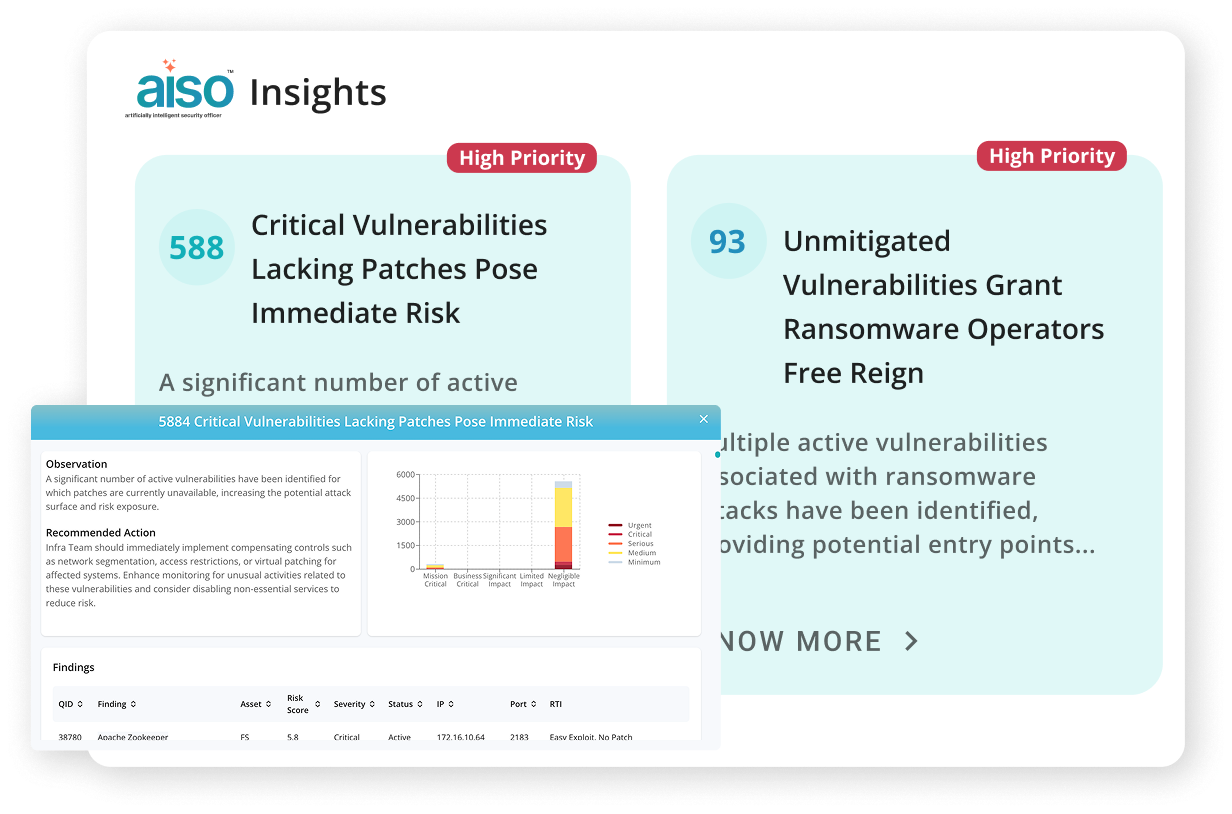
Vulnerabilities Lacking Patches Pose Immediate Risk
Active vulnerabilities identified with no patch currently available, increasing your attack surface.
Vulnerabilities Enable Lateral Movement or Privilege Escalation
A number of new vulnerabilities allow lateral movement across systems and privilege escalation.
Fits into the stack you already run.


You can't defend what you don't know exists
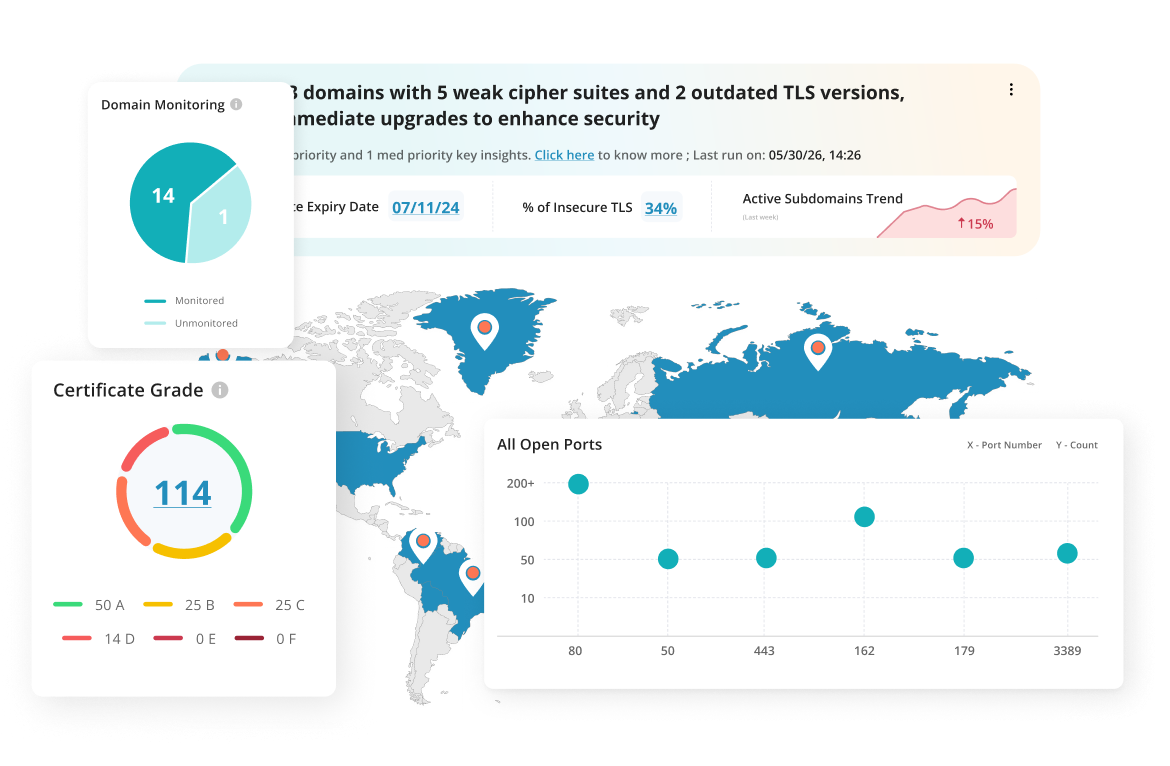
Map every internet-facing asset the way an attacker maps it. Subdomains, staging boxes, dormant hosts long off the inventory.
- Non-intrusive discovery. One domain in, every connected subdomain out.
- Continuous monitoring. Flagged in hours, not quarters.
- TLS & certificate grading. Protocol strength and cert expiry, A+ to F.
- Criticality tagging. Set once, inherited by every finding on the asset.
- Workflow integrations. Tested, validated and closed in one platform.
Stop counting CVEs. Start fixing what matters
Thousands of CVEs on a spreadsheet won't tell you what's reachable, exploitable, or worth a sprint. Assessment correlates threat intelligence with your real environment to show what to fix first.
- AI threat correlation. Live exploit intel, not a static severity score.
- Smart prioritization. A cycle's worth of findings, reduced to the ones that matter.
- Continuous & release-triggered. Reruns on every deploy, not quarterly.
- MTTR tracking. Whether you're closing risk faster, not just busier.
- Workflow integrations. Ranked findings into Jira, GitHub, ServiceNow, and Slack.
Drop a URL. Find out what an attacker would find
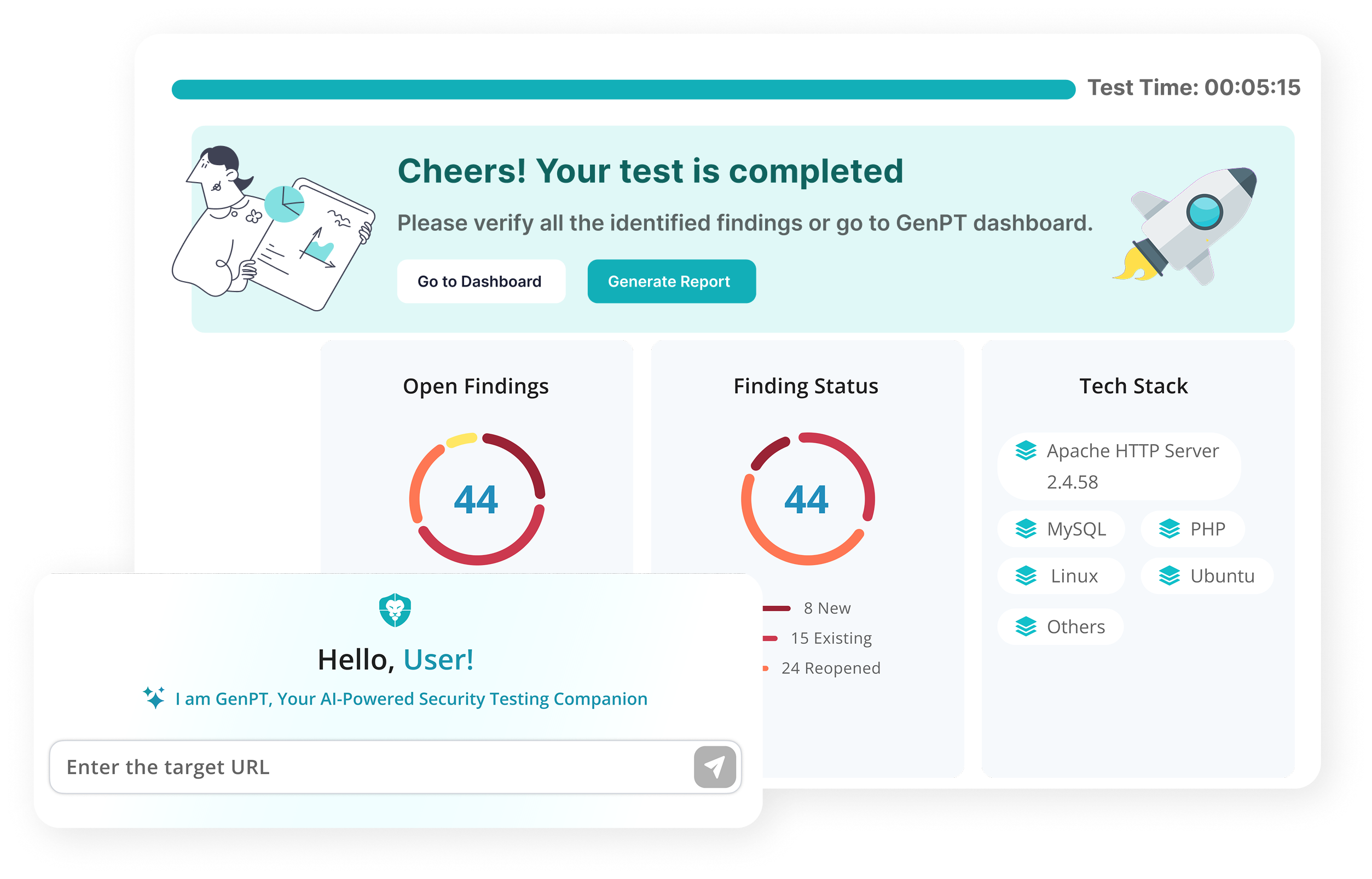
Fingerprints your stack, builds a test suite for it, then attacks behind MFA logins and authenticated workflows most scanners never reach.
- Instant, one-click testing. CXO summary and technical detail in one export.
- Deep coverage beyond the surface. OTP, custom auth and JS-heavy apps, behind the login, with screenshots proving it.
- WAF-aware testing. Flags a firewall or rate limiter the moment it blocks payloads.
- IDOR without writing a test case. From your OpenAPI, Swagger, or Postman spec, using two IDs.
- Built into your pipeline. Runs in CI/CD, failing runs can block the build.
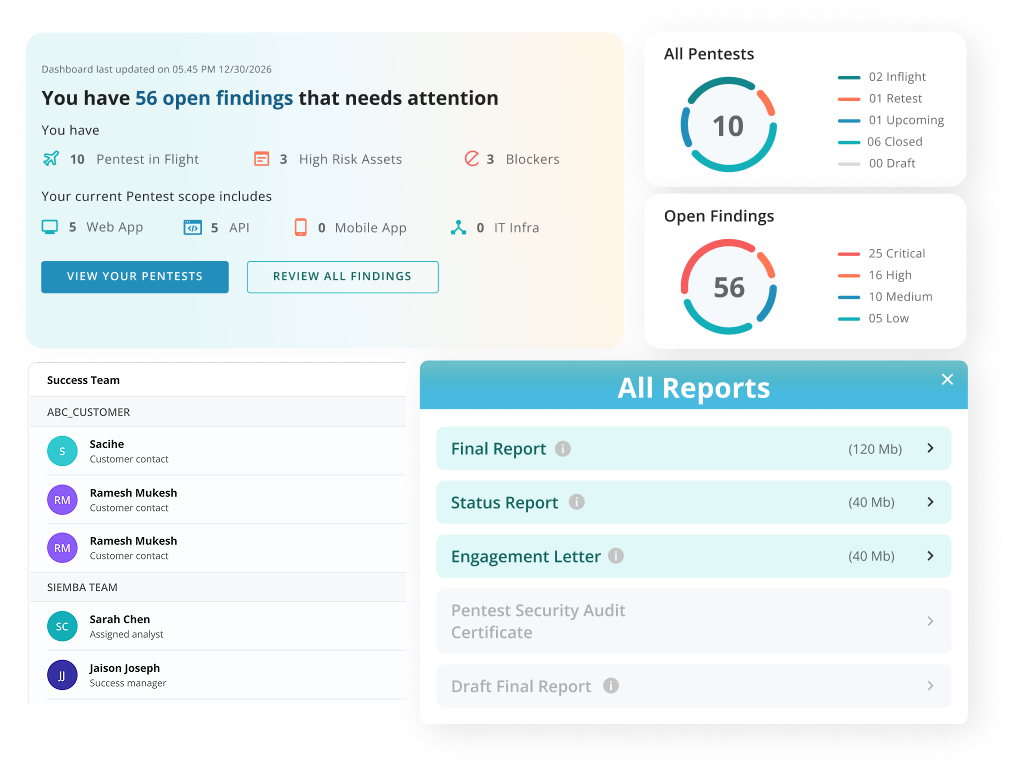
Manage every manual pentest from one dashboard
Certified in-house pentesters, OSCP and CEH, run manual deep dives across web, API, mobile, thick client, network and cloud, plus the AI systems most firms won't touch.
- Manual depth testing. Red-team depth on any asset, not a payload library on autopilot.
- Adversarial AI testing. Prompt injection, jailbreaks, model extraction, chained agentic attacks.
- Business logic flaws. The gaps no CVE catches but an attacker walks straight through.
- Chat with your pentesters. Nothing reaches you until a second engineer signs it off.
- Verified closure included. Every fix retested by a certified engineer. Never an add-on.
Manual engagements are scoped and priced separately from the platform subscription.
A fix isn't closed until it's proven closed
Fixes reappear. Trust isn't proof. Every fix is retested automatically and anything that comes back is flagged, unlimited. For critical fixes, a certified engineer signs off independently and issues an audit-ready certificate. And the window never shuts: most providers give you 30 or 90 days to retest, then close the door on a fix that regresses in month four.
From point-in-time testing to continuous, proven validation
What changes when discovery, prioritization, testing, and expert validation share one platform instead of four separate vendors.
| Traditional testing | Siemba, unified | Scanner-only tools | |
|---|---|---|---|
| What can it test? | Fixed scope, limited visibility, siloed coverage | Dynamic scope across web, API, cloud, mobile, network, and AI, continuously updated | Broad scope, but no shared visibility across tools |
| How are exposures found? | Manual discovery limits what's found | Continuous discovery and mapping, shadow IT included | Automated, but lacks business context |
| How are findings ranked? | CVSS score or tester judgment | Ranked by exploitability and business impact, not score alone | CVSS scoring alone |
| How is real risk proven? | Point-in-time pentests or annual reviews | Continuous autonomous testing proves exploitability; experts validate high-stakes targets | Automated scanning only; false positives common |
| How actionable is the output? | Static reports, delayed feedback | Evidence, remediation steps, and business impact for every finding | Alerts without much context |
| Can it test authorization? | Manual, expensive, and only for the assets you scoped | IDOR tested automatically from your API spec, with a curl command for every hit | Rarely; access-control logic needs tests a human writes |
| The bottom line | Reactive, and relevance expires between engagements | Continuous, measurable reduction of exploitable risk | Better visibility, limited risk reduction |
Why security teams choose the unified platform
One platform, one view of risk
The number you report upward is the same number your engineers work from.
Coverage that scales without headcount
Continuous discovery, autonomous testing on every release, and on-demand certified pentesting.
Single sign-on and evidenced findings
Log in through your own identity provider. Every finding ships with screenshots and video proof.
Audit-ready out of the box
Mapped on arrival to OWASP, NIST, PCI DSS, MITRE ATT&CK, CWE, GDPR, HIPAA, ISO 27001, and CMMC.
Certified pentesters on demand
OSCP, OSWE, and CEH-certified experts ready to go deeper, with full context, when stakes demand it.
Unlimited retesting, included
Validate fixes as many times as you need until findings are closed, at no additional cost.
Remediate what's exploitable, faster
See what's exploitable, how it chains together, and what impacts the business, without the noise.
Your data leaves when you do
A 90-day export window after contract end, then destruction with a signed attestation.
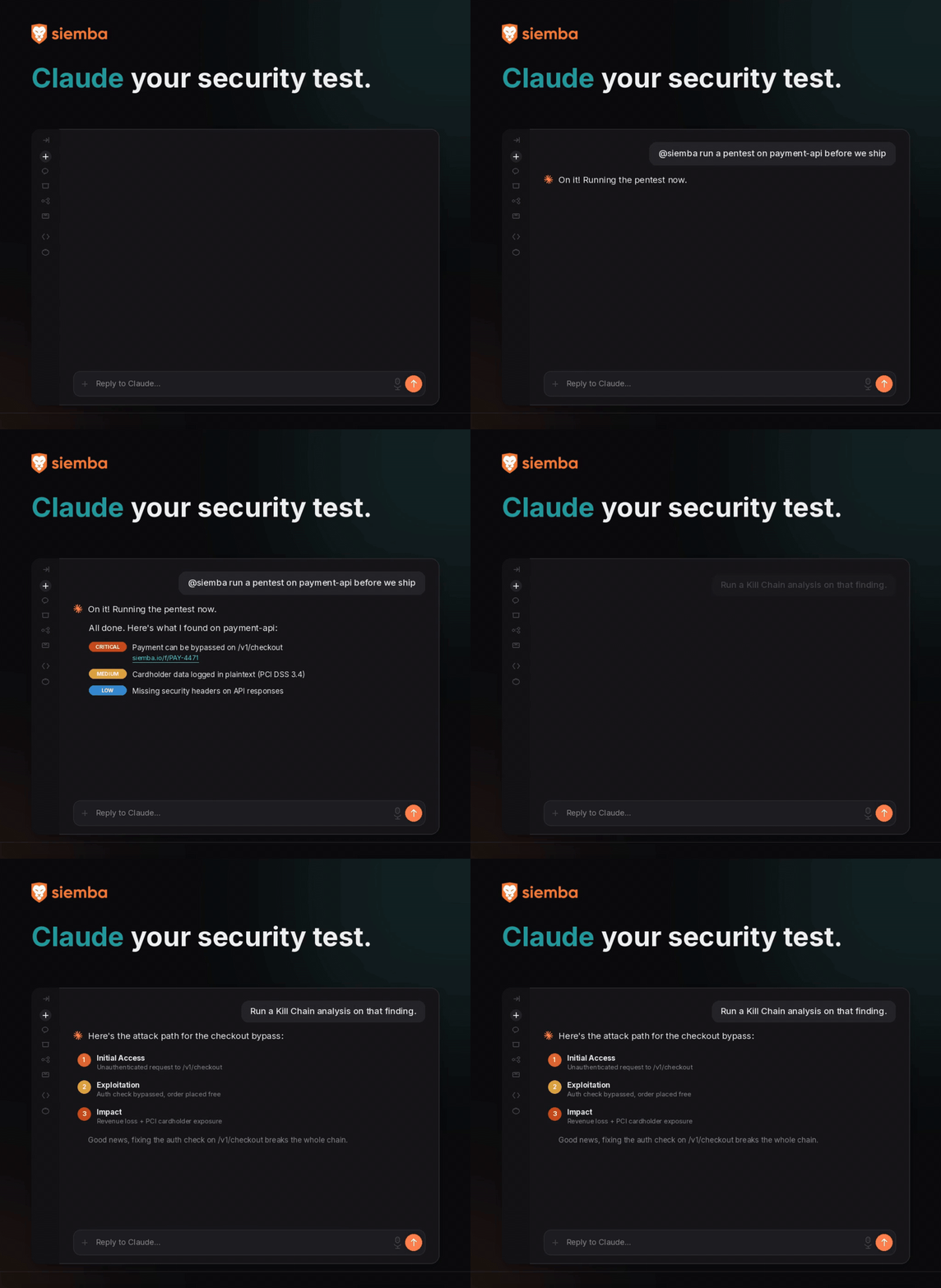
Run your pentest from your AI assistant
Prefer to work from Claude, Cursor, or any MCP client? Siemba is available as an MCP server. Trigger scans, pull findings, and scope engagements without leaving your AI client.
The outcomes security teams get from Siemba
Questions we hear before every demo
Scoped price. Closure included
Two lines, one platform. Here's where each one starts.
From $1,000/month
Attack surface mapping, vulnerability assessment, and autonomous penetration testing, with 50 tests per month included. Unlimited automated retesting, included.
From $3,000/app
One-time engagements start at $3,000 per application. Full report and verified closure retesting included. Continuous programs priced to your cadence.
Your attack surface is being mapped right now. Make sure it's you first
Book a live walkthrough or run a free scan today. No lengthy contracts, no hidden fees, unlimited automated revalidation included from day one.