
%202%20(1).svg)

Pragya Yadav
Published On: 31 Jul 2026Share:


According to the 2026 State of the Internet (SOTI) report by Akamai, APIs are now the primary attack surface. It further states that in 2025, 87% of organizations reported an API-related security incident. And to add to it, the average number of daily API attacks increased by 113% year-over-year.
The challenge becomes even more gigantic when organizations use multiple API architectures in their software. An enterprise might use REST APIs for web applications, GraphQL APIs for the frontend, and SOAP APIs for legacy integrations. And testing each API type manually is time-consuming, inconsistent, and difficult to scale.
So, what is the solution? This demands using automated API security testing for apps.
This article explores how organizations can test REST, GraphQL, and SOAP APIs using automation. Primarily to reduce security risks and build security into their software development lifecycle.
Key Takeaways
- Effective API security testing should cover all three: REST, GraphQL, and SOAP APIs, as each protocol has unique security risks.
- Automate testing for authentication, authorization, input validation, sensitive data exposure, and rate limiting.
- Use protocol-specific tests alongside common API security checks.
- Integrate automated API security testing into the CI/CD pipeline to detect vulnerabilities early to have secure and continuous delivery.
- Combine automated testing with runtime monitoring and periodic penetration testing. It identifies new threats and maintains a strong API security posture.
Why We Should Focus on API Security Testing
APIs expose business logic and sensitive data directly to consumers, which is not the case with web apps. So, attackers no longer need to exploit the user interface. They can simply interact with backend services and attack.
Common API attacks include:
- Broken Object Level Authorization (BOLA)
- Broken Authentication
- SQL Injection
- XML Injection
- Excessive Data Exposure
- Server-Side Request Forgery (SSRF)
- Security Misconfiguration
- Business Logic Abuse
These vulnerabilities appear in the OWASP API Security Top 10, making API security testing a critical part of any security program.
GraphQL, REST, and SOAP API: Differences
REST, GraphQL, and SOAP all help apps exchange data. But they differ significantly from each other. The differences lie in how they communicate, structure the requests, and apply security. This also means that each API type introduces unique security risks and requires a different testing approach.
REST APIs
REST APIs use standard HTTP methods such as GET, POST, PUT, and DELETE. They exchange data in JSON format. They expose multiple endpoints, each representing a specific resource.
Security testing for REST APIs focuses on authentication, authorization, input validation, rate limiting, and vulnerabilities like Broken Object Level Authorization (BOLA) and injection attacks.
GraphQL APIs
GraphQL exposes a single endpoint. Clients define what data they want through queries and mutations. This flexibility improves performance and reduces data transfer. However, it also causes unique security challenges, such as introspection abuse, excessive query depth, query batching, and unauthorized access to sensitive fields.
So, in addition to the normal traditional API security checks, you need to analyze query complexity, schema exposure, and field-level authorization.
SOAP APIs
SOAP (Simple Object Access Protocol) is an XML-based protocol used in enterprise applications. It relies on WSDL (Web Services Description Language) files to define available operations. It commonly uses WS-Security for authentication and message integrity.
Because SOAP processes XML messages, vulnerabilities such as XML External Entity (XXE) attacks, XML Signature Wrapping, SOAP Action manipulation, and WS-Security misconfigurations can happen. These protocol-specific risks are often missed by traditional web application scanners.
Why Consider These Differences for Security Testing
A single testing strategy cannot effectively secure all API types. REST, GraphQL, and SOAP share common risks such as broken authentication and authorization flaws. Each protocol also has unique attack vectors. So, we need specialized testing techniques for each of them.
A good API security program should automatically detect the API type, apply protocol-specific security tests, and validate vulnerabilities against the OWASP API Security Top 10.
API Pentesting Comparison: REST vs GraphQL vs SOAP
|
Area of Focus |
REST API Pentesting |
GraphQL API Pentesting |
SOAP API Pentesting |
|
Endpoint Discovery |
Multiple endpoints (/users, /orders, /products) are tested individually. |
A single endpoint (/graphql) serves all operations, requiring schema introspection or analysis. |
Operations are defined in WSDL files and accessed through XML requests. |
|
Attack Surface Visibility |
Endpoints are exposed through URLs and OpenAPI/Swagger documentation. |
The attack surface is hidden within queries, mutations, types, and relationships in the schema. |
The attack surface is defined by WSDL operations, XML schemas (XSD), and WS-Security configurations. |
|
Authentication Testing |
Test API keys, OAuth, JWTs, session tokens, and authentication bypass. |
Test authentication for queries, mutations, subscriptions, and introspection access. |
Test WS-Security tokens, UsernameToken, SAML assertions, certificates, and message authentication. |
|
Authorization Testing |
Verify BOLA, BFLA, and privilege escalation across endpoints. |
Test field-level, object-level, and operation-level authorization. |
Test authorization for SOAP operations and message-level permissions. |
|
Data Exposure Risks |
Excessive data exposure through endpoint responses and insecure object references. |
Sensitive fields may be exposed through nested queries, aliases, or introspection. |
Sensitive information may leak through verbose SOAP faults, XML responses, or WSDL files. |
|
Injection Testing |
SQL injection, NoSQL injection, command injection, header injection. |
GraphQL injection, SQL injection through resolvers, NoSQL injection. |
XML injection, XXE, XPath injection, SQL injection within XML parameters. |
|
Input Validation & Fuzzing |
Test path, query, header, and JSON body parameters with malformed inputs. |
Fuzz GraphQL variables, nested objects, fragments, aliases, and custom scalars. |
Fuzz XML elements, attributes, namespaces, and SOAP envelopes. |
|
Resource Abuse |
Test rate limiting, endpoint abuse, and large payload handling. |
Deep queries, recursive queries, aliases, and query batching can exhaust server resources. |
XML entity expansion, oversized XML payloads, and recursive entity attacks can cause DoS. |
|
Protocol-Specific Attacks |
HTTP verb tampering, insecure CORS, insecure deserialization. |
Introspection abuse, query batching, query depth attacks, alias overloading. |
XXE, XML signature wrapping, SOAPAction manipulation, WS-Security misconfigurations. |
|
Business Logic Testing |
Validate workflows such as payments, discounts, approvals, and object ownership. |
Test workflow abuse through chained queries and mutations. |
Verify transaction integrity, workflow authorization, and enterprise business processes. |
|
Error Handling |
Check for information leakage through HTTP status codes and JSON error messages. |
Review GraphQL error objects for schema details and stack traces. |
Inspect SOAP fault responses for internal server information, XML parsing errors, and stack traces. |
Challenges in Manual API Security Testing
Manual testing works fine for small applications but is impractical for larger enterprise-level API ecosystems.
The challenges faced during manual API security testing are:
- APIs have hundreds of endpoints
- Frequent releases
- Multiple API versions to test
- Different authentication methods
- Constant schema changes
- Large microservice environments
Security teams often struggle to test as fast as the development in these enterprise ecosystems. That is why we need automated API testing. Automation makes sure every API is tested consistently throughout the development lifecycle.
What to Test During Automated API Security Testing
An automated security testing solution should test every layer of API security as follows.
API Discovery
The first step towards API security testing is to have a deep API discovery. Automated API discovery tools continuously identify and catalog all APIs in your environment. They can discover REST endpoints, GraphQL endpoints, SOAP services, hidden APIs, deprecated APIs, and shadow APIs existing outside the organization's documented inventory.
To gain complete visibility into the attack surface, you first need to maintain an accurate, up-to-date API inventory. To prioritize security testing, eliminate blind spots, and make sure that every API is monitored and protected.
Authentication Testing
During authentication testing, we check that only legitimate users and apps can access the API resources. Automated security tests verify the authentication mechanisms such as JWT validation, OAuth flows, API keys, session management, token expiration, and protection against weak authentication practices. They also identify issues like expired or tampered tokens, insecure credential handling, and authentication bypasses.
Since broken authentication remains one of the leading causes of API breaches, regularly validating authentication controls is mandatory to prevent unauthorized access and account compromise.
Authorization Testing
Here, it is verified that authenticated users can only access the resources and functions they are permitted to use. Every API endpoint should apply checks for user ownership, role-based permissions, object-level access, and administrative functions. Automated authorization testing helps identify critical vulnerabilities such as Broken Object Level Authorization (BOLA), Broken Function Level Authorization (BFLA), and privilege escalation by validating access controls across different users, roles, and resources. Regular authorization testing checks that sensitive data and business functions remain protected.
Input Validation
We check that APIs properly validate and sanitize all user-supplied data before processing. Automated security tests evaluate APIs for common injection vulnerabilities, such as SQL injection, command injection, NoSQL injection, XML injection, XPath injection, and Cross-Site Scripting (XSS).
They also send malformed, unexpected, and malicious payloads to verify that the API safely rejects invalid input. APIs should not expose sensitive information or compromise backend systems. It is essential to prevent attackers from executing unauthorized commands, manipulating data, or disrupting application functionality.
Sensitive Data Exposure
APIs should not disclose confidential information beyond what is necessary. Automated security scanners inspect API responses for the unintended exposure of Personally Identifiable Information (PII), authentication tokens, passwords, financial details, and other sensitive data. They also identify verbose error messages and unnecessary response fields that could help attackers.
API responses should return only the minimum amount of data required to fulfill each request, as per the principle of least privilege.
Rate Limiting
Here we check that APIs can withstand excessive or abusive requests without impacting performance. Automated security tests verify controls such as request throttling, login protection, resource consumption limits, GraphQL query complexity restrictions, and batch request limits. These tests also check whether attackers can bypass rate limits through techniques such as query batching or distributed requests.
Effective rate limiting helps protect APIs against denial-of-service (DoS) attacks, credential stuffing, brute-force attempts, and other forms of automated abuse. This works to maintain reliable service for legitimate users.
Automated API Security Testing: Best Practices
To maximize coverage, you must remember to:
- Maintain a complete API inventory.
- Test every API release automatically.
- Secure REST, GraphQL, and SOAP APIs using protocol-specific tests.
- Validate authentication and authorization on every endpoint.
- Test the vulnerabilities mentioned in OWASP API Security Top 10.
- Include negative testing and fuzzing.
- Monitor APIs continuously in production.
- Retest after every code or configuration change.
What to Keep in Mind While API Testing
Many organizations focus only on functional testing while overlooking security. Avoid these common mistakes:
- Ignoring GraphQL and SOAP, while testing only REST APIs.
- Assuming HTTPS alone provides adequate protection.
- Ignoring authorization testing.
- Exposing GraphQL introspection in production.
- Leaving SOAP WSDL files publicly accessible.
- Testing only during annual penetration tests.
- Failing to secure deprecated APIs.
- Overlooking third-party and partner APIs.
How Siemba Helps Secure Modern APIs
Modern applications demand modern API security testing. Siemba's GenPT provides deep API security coverage by fully mapping and testing GraphQL, SOAP, and REST APIs.
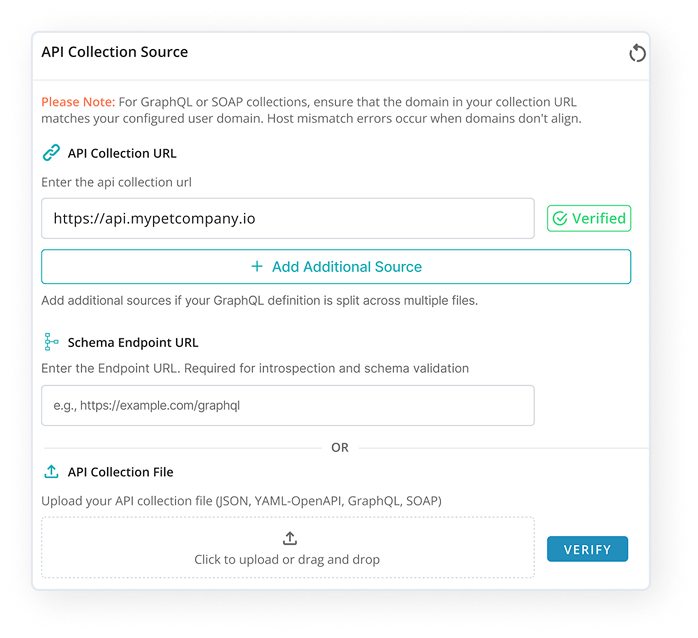
Unlike traditional scanners that focus primarily on endpoint discovery, GenPT analyzes API structures, relationships, authorization models, and business logic. It effectively identifies vulnerabilities that are often missed during conventional assessments.
Additionally, you can use Siemba's AISO (AI Security Officer) to prioritize security efforts by having real-time insights and risk-based decision support. Track key metrics such as Mean Time to Remediate, identify unpatched exploits, and reduce actual business risk. Identify, test, and remediate security weaknesses across modern apps, including AI applications and supporting infrastructure → Book a Demo to See AISO in Action.
Frequently Asked Questions
1. Why is GraphQL security testing different from REST API testing?
GraphQL uses a schema-based architecture and often exposes a single endpoint, which creates unique risks such as excessive data exposure, introspection abuse, query complexity attacks, and field-level authorization issues that traditional REST-focused scanners may miss. REST, conversely, relies on testing hundreds of distinct endpoints for localized authorization flaws and payload manipulation.
2. Is introspection dangerous in production environments?
Introspection is useful for development, but can provide attackers with detailed information about the API structure, available operations, and backend relationships if exposed in production without proper controls. Similarly, leaving SOAP WSDL files publicly accessible gives attackers a precise map to identify vulnerable XML methods.
3. Are SOAP APIs still relevant from a security perspective?
Yes. Many enterprise environments still rely on SOAP APIs for critical business functions, financial transactions, healthcare systems, and identity services. These APIs often contain sensitive data and require dedicated security testing, particularly against XML-specific parsing attacks like XXE.
4. Can traditional vulnerability scanners fully test modern APIs?
In many cases, traditional scanners may struggle to map GraphQL schemas, understand nested relationships, validate field-level authorization, or identify business logic flaws unique to GraphQL environments. They also frequently fail to understand multi-step REST workflows, relying only on shallow endpoint discovery.
5. How often should GraphQL, REST, and SOAP APIs be tested?
Organizations should perform continuous or recurring API security testing, especially after schema changes, feature releases, infrastructure updates, authentication changes, or major integrations, to ensure new vulnerabilities are identified quickly.