

.svg)


Prove your APIs enforce authorization,
not just that they respond
A valid 200 looks like success to a scanner. Every endpoint in your collection tested for the authorization gaps that actually leak data.



.png)









From first run to audit-ready in minutes
Collection parsing, dynamic analysis, protocol-specific analysis, de-duplication and AI enrichment, every stage visible while it runs. Minutes, not days. Larger surfaces take longer and you set the pace.
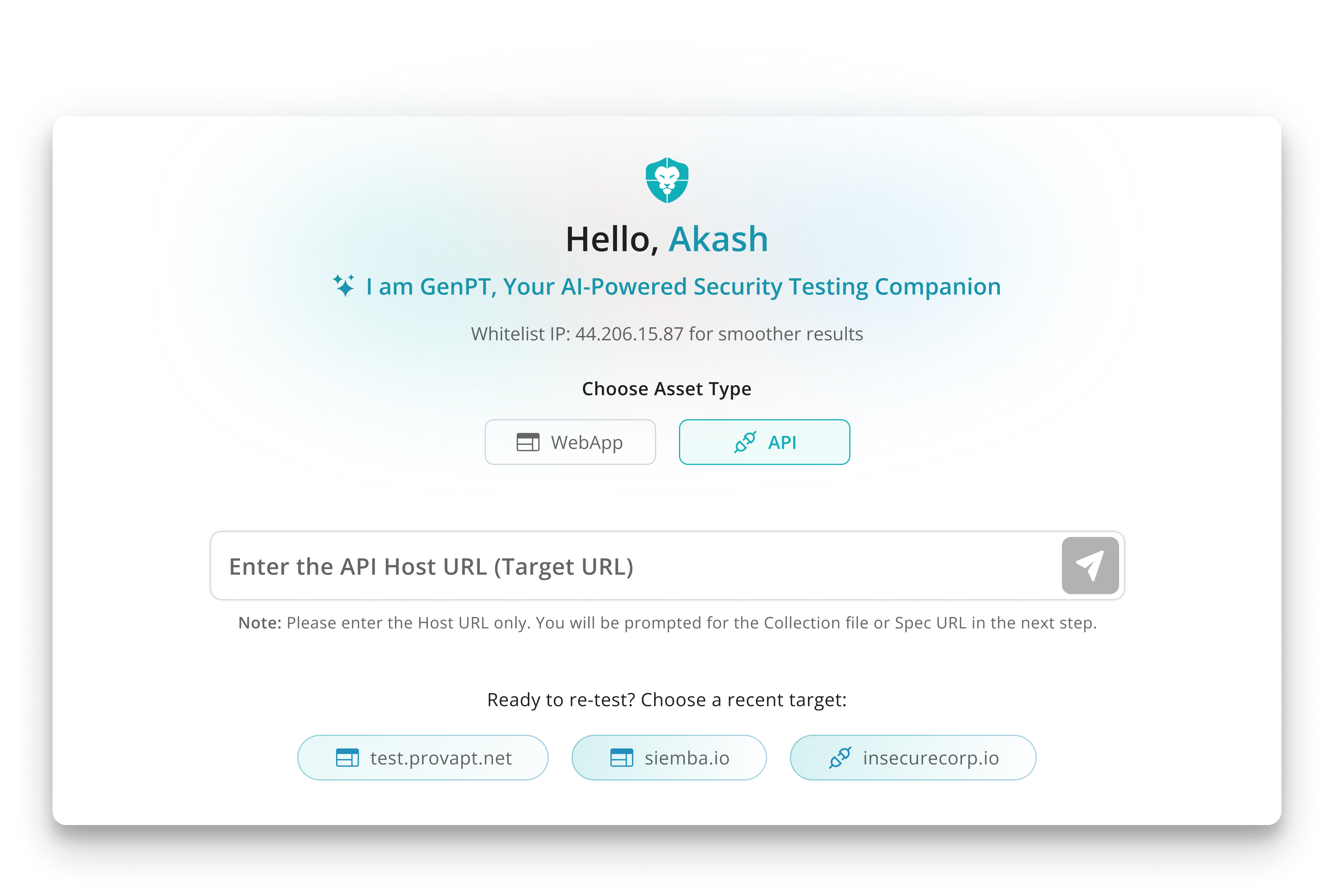
Your full API collection. Tested end to end
Drop in a collection URL, an OpenAPI or Swagger file, or a Postman collection. Siemba's autonomous testing engine reads what you supply and tests every endpoint in it, checking for injection points, excessive data exposure and access-control gaps that traditional scanners consistently miss.
Collection coverage
- REST, GraphQL and SOAP from a single collection URL
- Your collection is used as supplied: OpenAPI, Swagger or Postman, with every endpoint in it in scope
- GraphQL schemas resolved through introspection analysis, SOAP operations read from WSDL
- Path, query, header and body parameters parsed from the spec, so tests match the contract your API publishes
What gets tested for
- Authenticated testing, so the endpoints your users actually reach are in scope. JWT, Basic or API key with a custom header
- Injection, including boolean-based and blind SQL, NoSQL, command, XML and XPath
- Excessive data exposure, verbose faults and improper error handling
- Broken authentication, weak or misconfigured auth mechanisms and token handling
- Access control gaps at object, property, field and function level
- WAF evasion detection, so a blocked scan never reads as a clean one
IDOR Testing: Prove your users only see their own data
This is the part of API penetration testing that stays manual at most firms, because it needs real business context. Siemba automates the setup and keeps the judgment.
What a confirmed hit looks like
One ID changed. One token. Both responses valid. That is why a scanner records nothing, and why the finding arrives with a curl command attached.
API Penetration Testing: Automated Setup, Human Validation
Broken object level authorization, the vulnerability class better known by its classic name, IDOR (insecure direct object reference), needs no sophisticated payload, only knowing that record 1042 belongs to someone else. You supply two IDs per parameter; Siemba writes and runs the test cases and returns curl commands. Our certified testers cover what automation cannot reason about: chained flows, privilege boundaries, function-level authorization. How our PTaaS engagements work ›
REST, GraphQL and SOAP each fail differently
REST, GraphQL and SOAP share risks like broken authentication and authorization. Each also has attack vectors the others do not. Siemba detects the type and applies protocol-specific tests on top of the common checks.
Many endpoints, each its own surface
Endpoints tested individually across path, query, header and JSON body parameters.
- BOLA and BFLA across endpoints, plus privilege escalation
- Verb tampering, insecure CORS, unsafe deserialization
- Rate limiting, endpoint abuse and large payload handling
- Commonly missed: field-level authorization. The endpoint is protected, the response fields are not.
One endpoint, a hidden surface
The attack surface lives inside queries, mutations, types and relationships, not in a URL list.
- Introspection abuse, schema exposure and field suggestion leaks
- Query depth, recursion and batching used to exhaust resources
- Field-level authorization, nested queries and sensitive fields
- Commonly missed: batched queries. The rate limit counts requests; the abuse happens inside one.
XML, and everything that comes with it
Operations defined in WSDL, secured by WS-Security, and routinely missed by web application scanners.
- XXE and XML entity expansion
- WS-Security misconfiguration, UsernameToken, SAML assertions and certificates
- Publicly accessible WSDL files exposing a method map
- Commonly missed: legacy operations behind a modern facade. Deprecated, never decommissioned.
A full protocol-by-protocol breakdown is in our guide: API security testing across REST, GraphQL and SOAP.
Mapped to the OWASP API Security Top 10
Most risks have automated coverage. Sensitive business flows and unsafe consumption of third-party APIs need a tester who understands what your product does, and we say so rather than pretending a scanner can reason about your business logic. Both are included. Every finding carries its OWASP mapping into the report your assessor reads.
Every finding arrives audit-ready
Four scores on every finding: Likelihood, CVSS 4.0, Potential DREAD across all five dimensions, and a Business Risk Score weighted by how critical the asset is. Mapped to OWASP, NIST and more at ingest, with the reasoning attached.
Reproducible, not asserted
Request and response in full, proof of concept, repro steps and remediation, down to the exact vulnerable parameter.
Every verdict shows its reasoning
Classified by an LLM reading the actual response body, not by matching a signature or a status code alone, so a 200 with an empty result or a generic error page doesn't get scored as a hit. De-duplicated at ingest, then tracked New, Existing, Reopened or Fixed. The evidence you hand an assessor is the record your engineers worked from.
Your report, your format
Executive summary and engineer detail out of the same run, exported in one click. AISO™ ranks what to fix first ›
How Siemba compares
Point-in-time and signature-led
What most API security testing looks like today
- One protocol handled properly, with GraphQL and SOAP treated as an afterthought
- Cannot evaluate authorization, because a valid 200 looks like success
- Findings arrive as a PDF, then someone maps them to PCI and ISO by hand
- An empty result and a blocked scan are indistinguishable
- Retesting is a separate engagement, often a separate invoice
Continuous, authorization-aware, closed
Automated testing with a pentest team behind it
- REST, GraphQL and SOAP from one collection, each with protocol-specific checks
- Object and function level authorization tested directly with real ID pairs
- Compliance mappings and four risk scores attached at ingest
- Findings tracked to Fixed, with retest built into the engagement
Runs where your engineers already work
Findings that sit in a portal nobody opens have not reduced your risk.
Fits your workflow: Jira, ServiceNow, Slack and GitHub, with single sign-on through Okta.
Build gates
Native gates for Jenkins, GitLab and GitHub Actions. Set a severity threshold and any build crossing it is blocked. Keys generated in minutes.
GitHub issues
Findings open as native GitHub issues the day they are detected, with full context. No copy-paste, no handoff delay.
Configuration, throttling, schedule
Recurring scans daily, weekly or monthly. Freeze windows up to 30 days. Dashboards and pipeline configuration are mobile-responsive. Four throttle modes so coverage never costs you uptime.
The outcomes security teams get from Siemba
Four disciplines, one risk model
Mapping finds it. Assessment scores it. Autonomous testing proves it. Certified engineers go deeper when the stakes demand it.
Attack Surface Mapping
Find every internet-facing asset first. No agents, no credentials.
Learn more →Vulnerability Assessment
Infrastructure findings with exploit signal and a Business Risk Score.
Learn more →Autonomous Pentesting
Drop a URL. Authenticated testing behind MFA, with evidence on every finding.
Learn more →Expert-Led Pentesting
Certified in-house testers on web, API, cloud, network, mobile and AI systems.
Learn more →The Full Platform
All four disciplines, one workflow, one risk model, one proof of closure.
Learn more →Pricing
One subscription for automated testing. Expert engagements scoped per app.
Learn more →The questions you'll actually ask
What is API security testing?
What is API pentesting?
Does this cover the OWASP API Security Top 10?
Does this test for IDOR?
How long does an API penetration test take?
Do you test REST, GraphQL and SOAP APIs?
Do you need our API documentation or source code?
Will API testing affect our production environment?
Can this satisfy a PCI DSS or SOC 2 penetration testing requirement?
See what API testing that closes findings looks like
Bring a collection URL to the call. We will map your surface live and show you what a first run turns up.