
%202%20(1).svg)

Lavanya Chandrasekharan
Published On: 23 Feb 2026Share:


Most high-stakes enterprises already run security scanners, annual assessments, and periodic penetration tests. Yet many security leaders still cannot prove what actually is not exploitable in production.
This certainty gap is inevitable as hybrid environments change daily. Security posture degrades faster through shadow API sprawl, cloud instances that spin up and down unmonitored, and fragmented identity permissions across multi-cloud infrastructure. As a consequence, point-in-time results age fast, while severity scores drift away from real-world exposure.
And that is not all. Attackers are leveraging AI to automate reconnaissance and exploit development, significantly lowering the barrier to entry. AI-driven threats shorten discovery cycles, attack surfaces keep expanding, and boards and regulators want evidence of effectiveness. That is why penetration testing tools matter now. Used well, they strengthen preemptive cybersecurity (an emerging trend) by making continuous validation practical inside a Full Stack CTEM program.
In this article, we explain the capabilities that effectively emulate how attackers move through real environments. True validation goes beyond a one-off engagement or a single script. It should help you validate exploitability, confirm attack paths, and verify fixes over time.
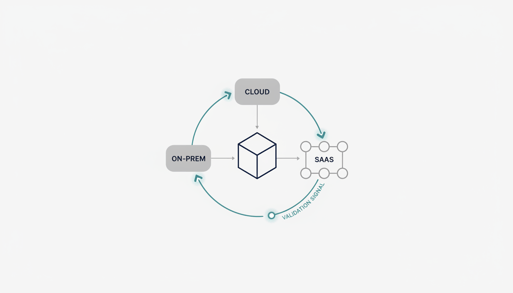
Industry Shift to Preemptive Exposure Management
The market is moving away from purely reactive "Detection and Response" models. Instead, the industry is shifting toward Preemptive Exposure Management. According to recent Gartner insights, this is not just a new tool category but a progressive way of executing exposure management. The goal is to identify and neutralize threats before they materialize into attacks.
Traditional vulnerability management creates a "patch everything" backlog that burns out teams. But preemptive strategies use AI and intelligent simulation to validate what is truly exploitable first. By continuously validating attack paths, organizations can prioritize the 5% of exposures that actually matter. So the focus shifts from managing lists of vulnerabilities to preemptively eliminating the opportunity for an attack to succeed.
Pentesting in Full Stack CTEM
Full Stack CTEM works when it is treated as a cycle. You discover exposure, prioritize what matters, validate what is truly exploitable, remediate, and then verify that the fix holds as the environment changes.
Pentesting tools belong in the validate and verify steps. They are the bridge between what looks risky on paper and what can actually be used in production.
This framing also clarifies what pentesting is not. A basic vulnerability scanner can tell you what is present, but it rarely proves real-world exploitability or shows how issues chain together. And while SAST and DAST are valuable in the SDLC, they often focus on an application or codebase in isolation. Modern enterprises need adversarial testing that can traverse what attackers traverse. This includes identities, exposed services, cloud control planes, misconfigurations, and application logic.
In practice, teams use a few modes of penetration testing tools, depending on where they need coverage and how often they need proof:
- Automated offensive security platforms that continuously probe for real-world exposures across internal and external surfaces.
- DAST for live applications and APIs, especially where behavior and configuration matter more than code patterns.
- PTaaS models that blend platform automation with human-led testing and structured tracking.
- Hybrid human-plus-AI approaches that increase coverage and speed while keeping human judgment central.
Why Continuous Validation Matters
Let's consider a realistic hybrid scenario to see why this matters.
A hybrid enterprise might scan routinely and still miss a chain that crosses domains. A cloud role is over-permissioned. An internal service is reachable from a misconfigured segment. And an API endpoint has an authorization flaw that only appears with real traffic patterns.
None of those signals alone looks decisive. Adversarial testing can show the chain as a single exploitable path, then confirm whether remediation actually breaks the path. That is how continuous validation supports a proactive defense system rather than a static report.
Mistakes That Derail Teams
Most selection failures are not technical. They rather come from optimizing for activity instead of proof. A tool can be impressive in a demo and still fail to support continuous validation inside real CTEM workflows.
Watch for these patterns early, because they are expensive to unwind after rollout.
- Over-weighting payload lists:
Focusing on raw counts instead of proving exploitability and reachable attack paths. - Treating pentesting as an event:
Failing to integrate it as an ongoing capability in a CTEM program. - Accepting alert noise:
Settling for findings without risk-based prioritization or clear remediation guidance. - Ignoring workflow fit:
Choosing tools that generate static reports that age before remediation even begins. - Failing to define success:
Not setting metrics up front like reduced exploitable paths, faster fix validation, and improved audit readiness.
So What High-Standard Evaluation Criteria Holds Fast
It helps to start with a simple premise. Not all penetration testing tools are built for continuous validation, and not all fit a CTEM workflow. Some optimize for coverage in a narrow surface. Others optimize for a one-time engagement.
The goal should be to choose a tooling stack that can repeatedly prove what is exploitable, and just as importantly, prove what is no longer exploitable after change. Here are the filters that matter most:
1. Attack Surface Coverage
Attack surface coverage is the first filter. Look for cohesion across external, internal, cloud, and application surfaces, especially if you rely on APIs, microservices, and modern identity patterns. A tool that forces you to split the environment into unrelated projects can be hard to operationalize. That split also makes it harder to see how exposure chains across boundaries.
What to ask: Can this tool model exposure chains across external, internal, cloud, and application environments without forcing us into siloed projects?
2. Exploit Realism
Exploit realism is the second filter. Favor tools that can validate findings in controlled ways and chain them into real attack paths. This is where exploit-aware prioritization matters more than long vulnerability lists. If a tool can show that a weakness is reachable, usable, and meaningful in your environment, you can prioritize remediation with confidence and explain the decision in business terms.
What to ask: Can this tool demonstrate an end-to-end exploitable attack path instead of just listing isolated CVEs or test cases?
3. Integration
Integration is a very important consideration because it decides whether the tool becomes decision support or shelfware.
- In CI/CD: You want the ability to trigger targeted tests from deployment events or change windows without turning the pipeline into a bottleneck.
- In Ticketing: Results should land where work happens, such as Jira or ServiceNow, with enough context to act.
- In SecOps: Integrations should help you validate exposure and measure progress, not add another alert stream to triage.
What to ask: Can findings flow directly into our existing remediation workflows (CI/CD, Jira, ServiceNow) without custom glue code?
4. Reporting
Reporting is where credibility is won or lost. Engineers need reproducible evidence and clear remediation guidance. Executives need a clean summary that ties exposure to business impact and operational risk. And many teams now need audit-ready reporting mapped to frameworks like PCI, NIST, and OWASP, with evidence that stays consistent as posture changes. When a tool cannot produce durable evidence, teams end up back in spreadsheets and slide decks.
What to ask: Does the tool preserve evidence over time so we can prove risk reduction and audit readiness, or does it reset with every scan?
5. Cadence & Spend
One-off assessments can be useful for a baseline, but continuous programs need predictable cadence and spend. Subscription approaches can make recurring validation easier, especially when you need ad hoc tests after changes. If you are considering PTaaS, pay attention to how the human layer is scheduled, tracked, and verified over time, not just how findings are delivered.
What to ask: Can we run this on a predictable schedule and budget, including ad-hoc validation after major changes?
6. Vendor Security & Support
You'll also need to assess the tool's own security and compliance posture. Regulated environments often require clear data handling, encryption, segregation, and residency options. This is also where strong vendor support matters. Look for access to practitioners who can help interpret edge cases in your sector and align results to business risk, without turning the output into generic compliance language.
What to ask: Does the vendor meet our security and compliance requirements and provide practitioner-level support when edge cases arise?
The Siemba Approach to Penetration Testing
The platform unifies automated validation and human expertise into a single CTEM-aligned system that continuously answers one question: What can actually be exploited right now?
- GenPT (Generative Pen Testing):
This is Siemba’s answer to the speed of modern development.
Instead of relying on static signatures, GenPT fingerprints your specific tech stack and executes payload-driven tests. It continuously probes internal and external applications to find exploitable paths, validating them without breaking production. You get the depth of a manual test with the speed of automation. - AISO (AI Security Officer):
Data without context creates noise, so Siemba employs AISO to act as the "brain" of the operation.
AISO analyzes findings, correlates them with threat intelligence, and scores them based on actual business risk rather than just technical severity. It serves as a strategic partner that helps prioritize what to fix first based on what is truly reachable. - PTaaS (Penetration Testing as a Service):
Automation cannot surface every flaw, especially in business logic and complex workflows.
Siemba’s PTaaS is natively integrated with the platform, giving you on-demand access to expert ethical hackers who extend and validate automated findings. This ensures continuous coverage from the platform while adding human creativity exactly where it matters most.
Siemba turns penetration testing into a continuous validation engine so you can prove which attack paths are open, confirm when they are closed, and keep them closed as your environment changes.
By consolidating these capabilities, Siemba allows organizations to move from reactive scanning to a living defense system that preemptively closes exposures.