
%202%20(1).svg)

Lavanya Chandrasekharan
Published On: 12 Dec 2025Share:


TL;DR: This blog covers how modern penetration testing is evolving from periodic manual scans to continuous, automated platforms. It explains how tools help security teams identify vulnerabilities in real time, prioritize risks based on business impact, integrate with DevSecOps workflows, and accelerate remediation for a stronger, proactive security posture.Penetration testing simulates real-world cyberattacks to find vulnerabilities before attackers do. This approach has a direct and measurable impact on the bottom line.
According to IBM's 2024 Cost of a Data Breach Report, organizations with regular testing cut their average breach costs by 40%. That isn't just a technical win; it's a core component of business continuity.
For security leaders, penetration testing is far more than an IT checkbox. It's a strategic effort that demonstrates due diligence to the board. It also satisfies regulatory requirements and provides concrete answers about the organization's security posture.
The average data breach costs over $4.45 million, so the case for offensive security investment makes sense and is in fact no longer optional. Because it is the only way to validate that your defenses actually work under pressure.
But the challenge is that traditional, annual penetration tests create a dangerous gap. Your organization changes constantly with new cloud deployments, updated applications, and fresh API endpoints. And if the security assessment happens only once or twice a year, new risks are missed.
Modern penetration testing tools solve these problems with comprehensive and continuous testing that operates on the same wavelength as your business velocity. And they provide the strategic visibility CISOs and engineering leaders need to manage risk effectively.
The Strategic Case for Penetration Testing Tools
Security leaders with the escalating technological breakthroughs contend with pressure from every direction, including shrinking budgets. But the board wants quantifiable risk metrics they can understand. While regulators require continuous compliance evidence, not just point-in-time snapshots. This multiplies the challenge because the threat actors are actively working to exploit vulnerabilities faster than traditional assessment cycles can identify them.
Modern penetration testing tools close these gaps, turning security from a reactive cost center into a proactive business enabler. They deliver the strategic visibility security teams need to manage risk effectively and meet compliance expectations.
Proactive Risk Reduction
This approach shifts your security program from firefighting breaches to preventing them. Automated penetration testing runs continuously across the attack surface. It identifies and prioritizes vulnerabilities based on actual exploitability and business impact. This means your team allocates remediation resources where they matter most and steadily reduce the organization's exposure before attackers find those same weaknesses.
And so, instead of discovering critical vulnerabilities during an incident, you address them during a normal development cycle.
Board-Level Reporting and Compliance
Board-level reporting becomes exceedingly clear and to the point. A modern pentest tool generates executive dashboards that translate technical findings into business risk language. Your board doesn't need to understand SQL injection, but they need to know if customer data is at risk.
These platforms provide compliance mapping for SOC 2, ISO 27001, PCI DSS, and HIPAA.. And comprehensive audit trails help make regulatory exams far less stressful, because you can present organized, time-stamped documentation of continuous security validation ready for auditors.
Faster Mean Time to Remediation (MTTR)
MTTR drops dramatically when you replace annual tests with continuous assessment. Traditional pentests deliver a report 30 to 60 days after testing begins. This means vulnerabilities sit exposed for months, and even after you receive insight, there is a gap until someone takes action.
Continuous penetration testing platforms, however, provide real-time vulnerability intelligence. They also offer automated retesting to confirm fixes immediately. Findings flow directly into existing ticketing systems (JIRA, Service Now etc), eliminating the email chains and spreadsheets that slow remediation to a crawl.
Demonstrable Return on Investment (ROI)
The ROI becomes clear when you compare continuous testing to periodic manual assessments. A single manual pentest can cost between $15,000 and $50,000 for a two-to-four-week engagement. And that only gives you a snapshot from a single day.
Modern platforms provide continuous coverage at a predictable annual cost. This delivers far more testing frequency while freeing your skilled personnel for strategic initiatives. You are not replacing human expertise but rather amplifying it by automating the routine work and redeeming expert time for complex analysis.
How Modern Tools Solve Traditional Penetration Testing Challenges
Security teams often struggle with fragmented toolsets that create blind spots. You might have one tool for web applications, another for cloud infrastructure, and a third for APIs. When these tools don't communicate, you lose visibility. Traditional, long testing cycles also mean 30 to 60 days pass between scoping a test and receiving findings. But in that time, your environment has already changed. This manual process simply cannot scale when your development teams deploy to production daily.
Modern penetration testing platforms resolve these challenges by combining intelligent automation with human expertise.
- Hybrid Approach: The best solutions run automated scanning continuously across your entire attack surface while also providing on-demand access to qualified pentesters for deeper analysis. This delivers the breadth of automation with the depth that only an expert can provide.
- Intelligent Prioritization: Advanced platforms cut through the noise that overwhelms security teams. They correlate vulnerability data with exploitability, asset criticality, and current threat intelligence. This highlights the small percentage of vulnerabilities that pose a genuine, business-critical risk. Your team can then focus on what matters.
- Scalable Coverage: Modern tools provide continuous monitoring that operates around the clock. This expands your coverage without expanding your headcount. One security engineer can manage continuous testing across hundreds of assets using a unified platform.
- Collaborative Dashboards: Enterprise-grade platforms break down silos with role-based views. Security analysts, developers, compliance officers, and executives all see the data relevant to them. Native integrations with Jira, ServiceNow, and SIEM platforms ensure findings flow seamlessly into your existing processes.
- DevSecOps Integration: This approach brings security directly into your development pipeline. It allows you to automatically test code commits, container images, and infrastructure templates before they reach production.
Essential Features of a Modern Pentesting Platform
When evaluating solutions, security leaders should look beyond raw scanning speed. The right platform must deliver strategic value, integrate with your business, and provide a clear picture of risk.
Unified Attack Surface Coverage
A modern tool must provide comprehensive assessment capabilities. It should cover your entire attack surface, including web applications, APIs, mobile apps, and cloud infrastructure across AWS, Azure, and GCP. Partial coverage creates dangerous blind spots. Sophisticated attackers will always probe for the single weakest entry point, so your platform must see them all.
The Hybrid Testing Model
Automation delivers breadth, speed, and consistency for continuous coverage. But human penetration testers provide the depth, creativity, and business-logic context that machines cannot replicate. Look for platforms that blend both. The best solutions have clear workflows for escalating an automated finding to an expert human analyst for deeper validation.
Actionable Reporting and Prioritization
The quality of the report separates a useful tool from one that just creates more work. Your platform must generate role-specific reports from the same data. This includes technical remediation guides for developers and high-level executive summaries with risk trends. It must also transform overwhelming vulnerability lists into a manageable action plan. True risk-based prioritization should rank findings using CVSS scores, exploitability data, asset criticality, and current threat intelligence.
Enterprise Integration and Scalability
A tool should not be a data silo. It must integrate into your ecosystem to accelerate remediation. Findings should automatically create tickets in Jira or ServiceNow and appear in your SIEM. The platform must also scale, offering flexible scheduling and performance controls to support a global enterprise. Finally, look for continuous testing and automated retesting. This closes the loop by confirming that fixes are effective without requiring a manual rescan.
Audit and Compliance Mapping
For GRC teams, this feature is a necessity. A strong platform eliminates hundreds of hours of manual audit preparation. It should automatically map all findings to common regulatory frameworks. This includes SOC 2, ISO 27001, PCI DSS, HIPAA, and NIST controls. This provides your auditors with a continuous, time-stamped record of your security validation efforts.
9 Best Penetration Testing Tools for Modern Security Teams
Here’s a curated list of the top best pentesting solutions for 2025. It's a breakdown of recommendations based on coverage, automation, and enterprise readiness.
1. Siemba
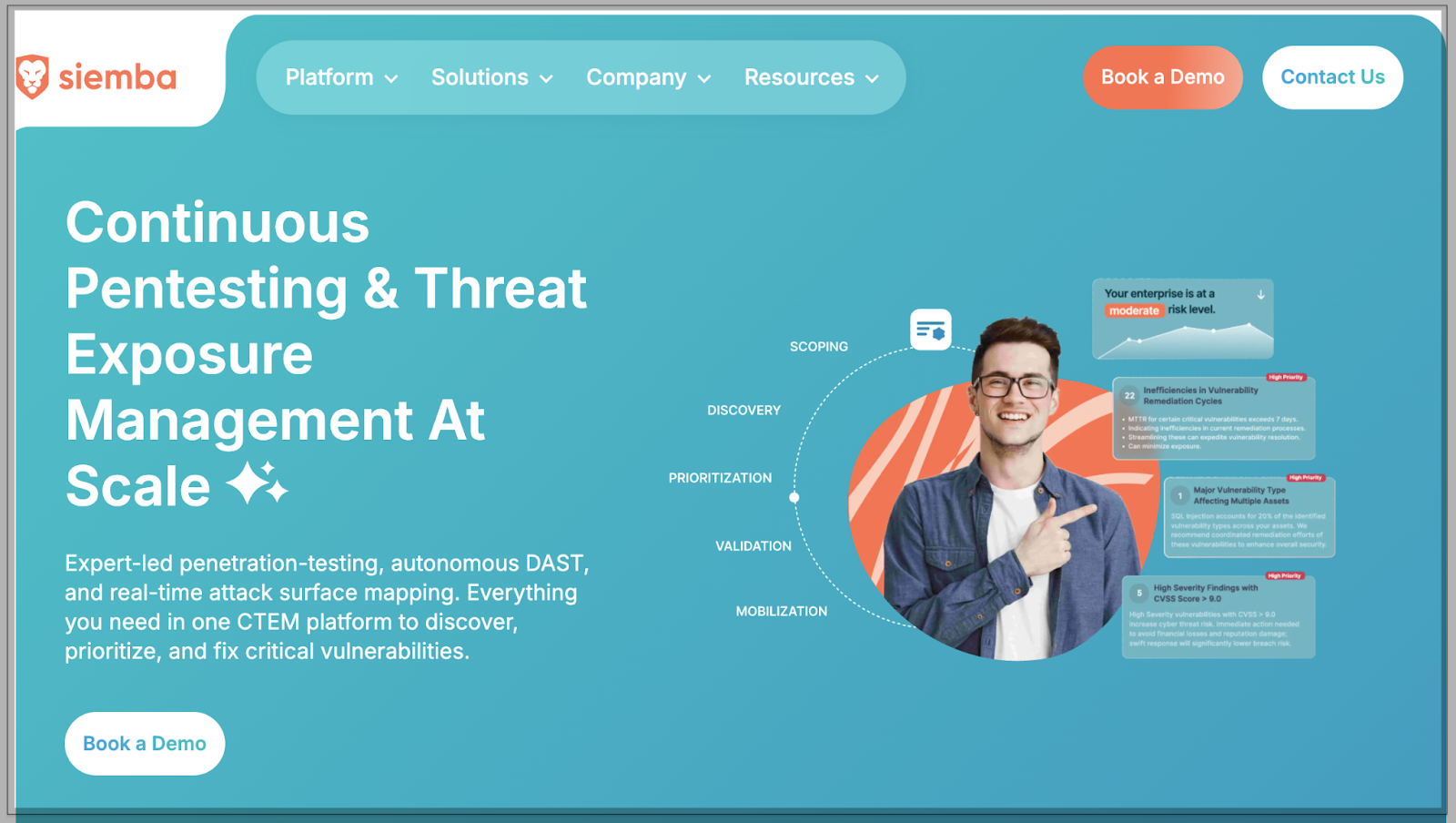
Siemba Siemba is a Full Stack Continuous Threat Exposure Management (CTEM) Platform. It moves beyond traditional, point-in-time scanning to provide preemptive security. The platform's core premise, which has received validation from Gartner, is that continuous visibility and validation are critical to modern defense.
Siemba was recognized in the 2025 Gartner® Hype Cycles™ for Security Operations, Application Security, and XaaS. It was also named a Sample Vendor for Preemptive Exposure Management (PEM), a high-impact strategy focused on remediating risk before exploitation occurs.
The unified, AI-powered platform provides a full-funnel offensive security solution. This includes External Attack Surface Management (EASM), AI-Driven Vulnerability Assessments (GenVA), AI-Native DAST (GenPT), and Enterprise PenTest as a Service (PTaaS). It's all managed by an AI Security Officer (AISO) that provides real-time, risk-based decision support, allowing security teams to focus on mitigating true business risk rather than chasing vulnerability counts.
Is It Right For You?
This is the ideal solution for CISOs and security leaders who are seeking to consolidate their fragmented security tools. If your goal is to move from a reactive to a preemptive security posture to manage escalating risks due to rising technologies and you need to demonstrate continuous compliance and ROI to the board, Siemba's unified CTEM platform is practically the most viable solution for you.
Visit Siemba
2. Burp Suite Enterprise Edition
Burp Suite is a widely used web application penetration testing platform. While the "Professional" version is a manual toolkit for individual testers, the "Enterprise Edition" is built for organizations. It provides automated, scalable DAST scanning across your web portfolio.
Integrates directly into the CI/CD pipeline, allowing DevSecOps teams to catch critical bugs like SQL injection and XSS before they ever reach production. Its reporting is clear and developer-focused, simplifying remediation.
Is It Right For You?
Burp Suite is suited for organizations where web applications and APIs are central to the business. It enables teams to embed automated, comprehensive web security directly into the development lifecycle.
Go To BurpSuite
3. Tenable Nessus Professional
Nessus provides a high-speed, accurate scanner that covers a massive range of assets, including IT, cloud, and OT/IoT devices. Nessus excels at network-level scanning, configuration auditing, and identifying missing patches across tens of thousands of CVEs. While often categorized as a vulnerability scanner, it is a foundational tool for any penetration testing program. It provides the initial reconnaissance map from which manual tests are launched.
Is It Right For You?
Nessus is an essential starting point for almost any security program. If your organization has a large, complex network and struggles with basic security hygiene (like asset discovery and patch management), Nessus provides the critical visibility you need to build a more mature program.
Go To Nessus
4. Metasploit Pro
Metasploit, from Rapid7, is a popular pentest framework. The "Pro" version wraps this powerful command-line tool in an accessible interface with automated features. Its primary function is not just finding vulnerabilities, but validating them through exploitation. Metasploit Pro can run simulated attacks, test anti-virus effectiveness, and manage social engineering campaigns. This provides the "proof of concept" that security teams need to show leadership the true risk of a vulnerability.
Is It Right For You?
This tool is built for organizations with an in-house offensive security team (a "red team").
It helps teams simulate real-world attacks, validate findings from other scanners, and demonstrate the exploitability of vulnerabilities.
Go To Metaspoilt
5. Pentera
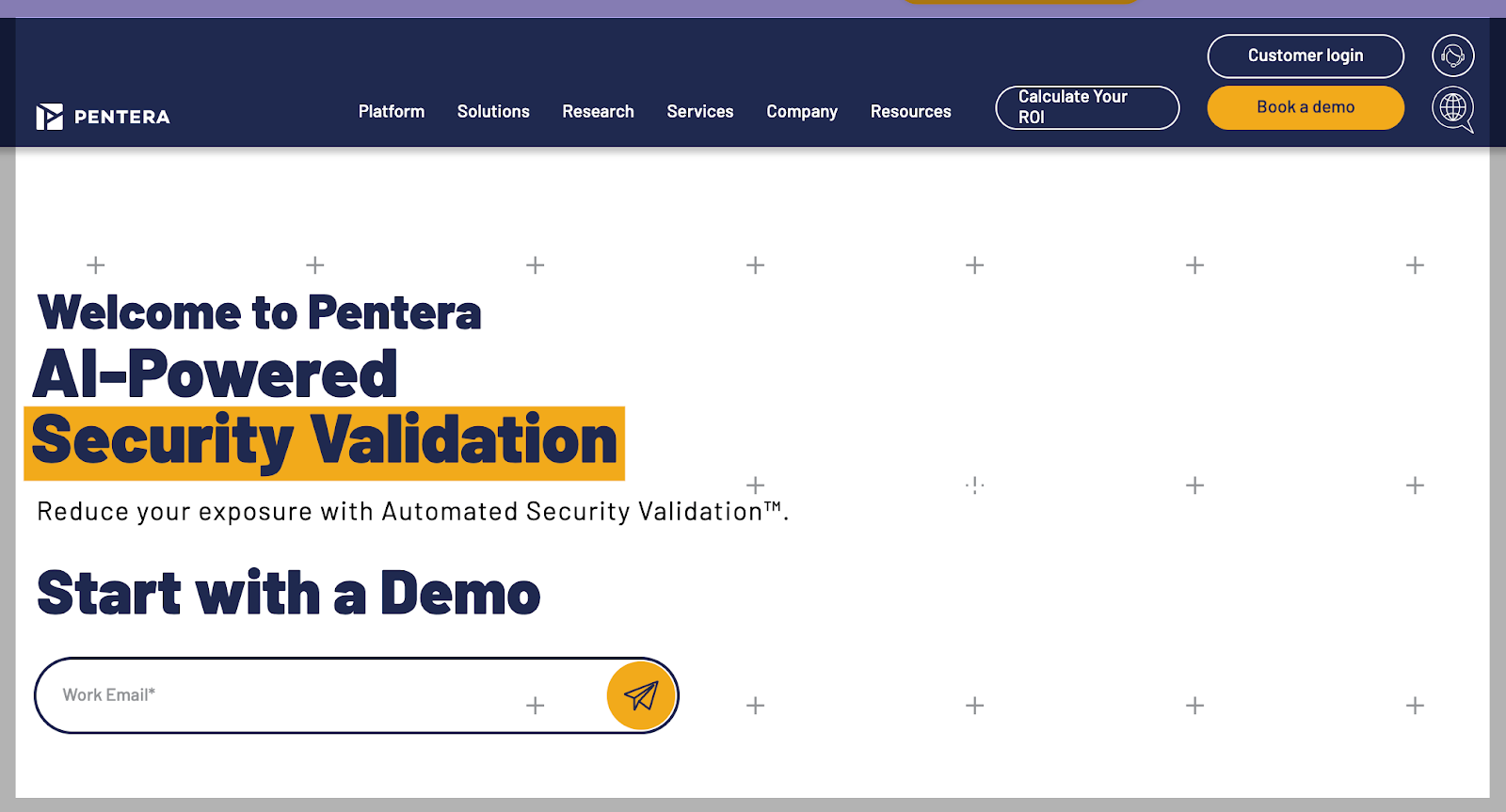
Pentera provides an Automated Security Validation (ASV) platform that goes beyond identifying vulnerabilities, exploits findings, and simulates attack chains, continuously tests your entire attack surface, from external assets to internal networks. This delivers validated insights on exposed assets and potential attack paths, helping teams reduce false positives and prioritize remediation.
Is It Right For You?
Pentera is designed for security teams seeking practical, validated insights rather than theoretical vulnerability reports. It continuously tests existing security controls (firewalls, EDR etc) to confirm they are functioning effectively.
Go To Penterra
6. Cobalt.io
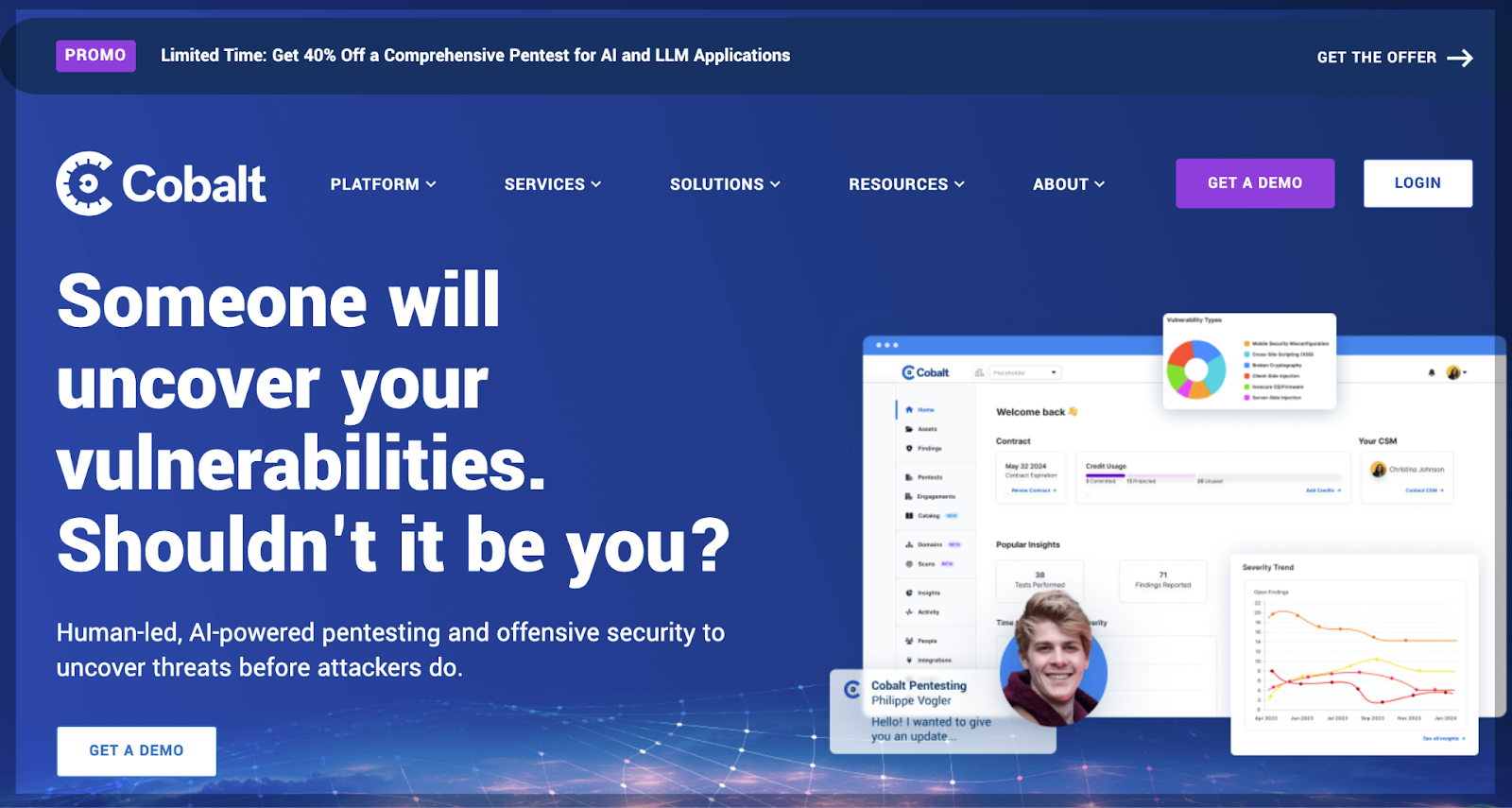
Cobalt is a Pentest-as-a-Service (PTaaS) platform that combines on-demand access to expert penetration testers with a modern SaaS interface. This hybrid approach addresses the limitations of traditional pentesting by offering faster testing, real-time collaboration, and accelerated remediation. It's a way to get the depth of manual pentest without the slow, multi-week reporting delays.
Is It Right For You?
This is a good choice for organizations that need high-quality, manual pentests for compliance (like SOC 2 or ISO) but want to move faster. If you need to augment your internal team with on-demand experts for web, mobile, and cloud testing, a PTaaS platform like Cobalt is a perfect fit.
Go To Cobalt
7. Invicti (formerly Netsparker)
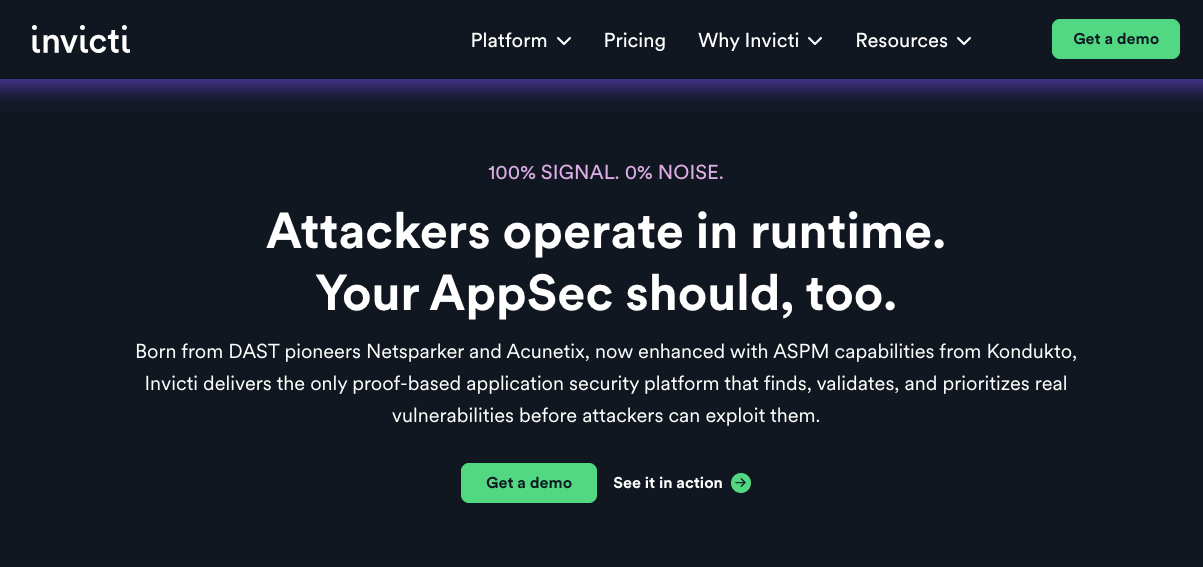
Invicti is an enterprise-grade DAST solution that focuses heavily on accuracy. Its key differentiator is "Proof-Based Scanning," which automatically and safely exploits vulnerabilities to confirm they are not false positives. This is a time-saver for security teams, as it eliminates the need for manual validation. Invicti is designed for wide, continuous scanning across hundreds or thousands of web applications. It integrates deeply with CI/CD pipelines and issue trackers to automate the DevSecOps workflow.
Is It Right For You?
Invicti is ideal for large enterprises with a sprawling portfolio of web applications. If your primary pain point is your security team wasting time manually verifying thousands of "potential" scanner findings, Invicti's focus on accuracy can deliver a strong ROI.
Go To Invicti
8. HackerOne
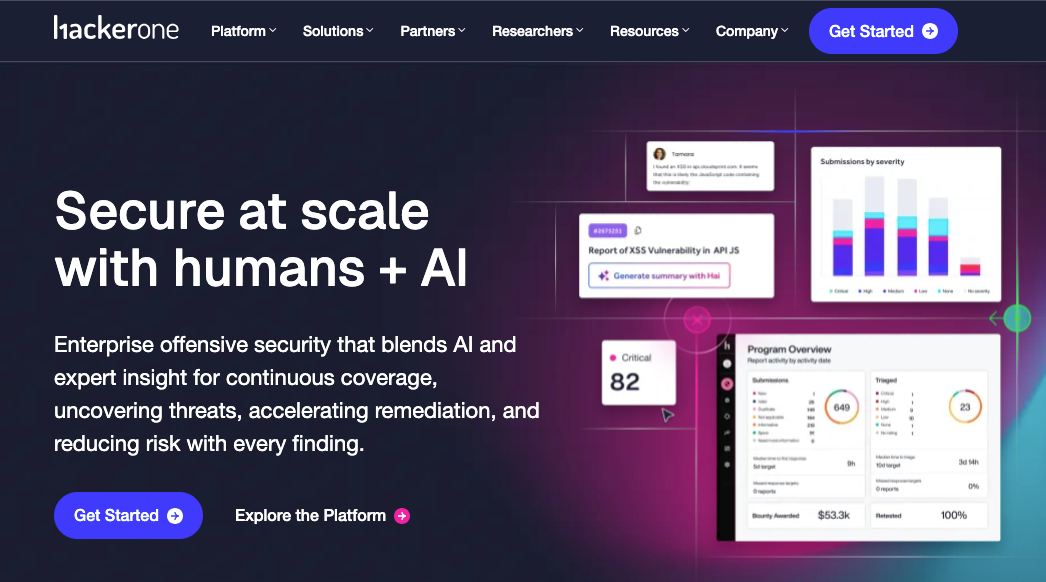
HackerOne is best known for its bug bounty platform, but it also offers a robust PTaaS solution. It leverages its global community of ethical hackers to conduct in-depth penetration tests on web, mobile, and network assets. This "hacker-powered" approach brings a diversity of skills and creativity that is difficult to replicate with a traditional, small pentesting team. The platform provides structured reports, remediation guidance, and retesting to validate fixes.
Is It Right For You?
This solution is for organizations that are ready to embrace a hacker-powered security model. If you want to go beyond standard compliance tests and subject your applications to the creativity of a diverse, global talent pool, HackerOne is a good choice.
Go To HackerOne
9. Intruder
Intruder is a modern, cloud-native vulnerability management platform. It simplifies exposure management by combining attack surface monitoring (EASM) with continuous vulnerability scanning. Its "emerging threat scans" automatically check your systems when new, high-profile vulnerabilities (like Log4Shell) are announced. The platform is designed for ease of use, with clean dashboards and integrations with Slack, Jira, and cloud providers. It makes continuous security accessible to teams that may not have a dedicated red team.
Is It Right For You?
This tool is perfect for cloud-first organizations and lean security teams. If you need an easy-to-use platform that provides continuous external and internal scanning with proactive threat alerts, Intruder is a strong, modern contender
Go To Intruder
Moving Forward With Confidence
Selecting the right penetration testing tool is a strategic decision. It directly impacts your organization's risk posture, compliance status, and the effectiveness of your security team. The goal is to transform this practice from a simple annual obligation to a continuous risk management capability.
A unified platform built on a Full Stack CTEM model, like the one offered by Siemba, is designed to do exactly that. This preemptive approach scales with your business and gives your board genuine confidence in your security program's maturity.
Ready to move from annual testing to continuous, preemptive security? Discover how Siemba's Full Stack CTEM platform provides the unified visibility and AI-driven insights you need to manage risk effectively.